
OSTEOPATHY AND PERFORMING ARTS
Performing arts medicine is a multidisciplinary medical discipline founded in the 1980s in the United States and UK. It focuses on preventive measures as well as treating specific disorders and pathologies arising in performers (singers, dancers, musicians, actors, circus...). The number of studies and research being done on the topic is exponentially growing every year and it is gaining an important place in medicine.
Being a performer means adapting to very specific (and often stressful) conditions as well as repetitive movements and this often comes with particular problems depending on the instrument or the art.
Why osteopathy?
Osteopathy is a holistic manual therapy that works well for musicians because they can be seen in their whole and help preventing adaptative strains in the body, thus avoid injury and improve performance
How does osteopathy work?
-
Pain reduction
-
Better mobility and performance
-
Reducing stress and improving relaxation
-
Injury prevention
-
Better body perception
-
Regulation of the nervous and hormonal systems
-
Better drainage, lymphatic and blood flow

Tasteninstrumente und Schlagzeug
Bei Pianisten, Organisten und Schlagzeugern wird der untere Rücken stark beansprucht. Die Bedienung der Pedale belastet die hintere Muskelkette des Beins und kann zu Ischiassymptomatiken führen.
Häufige Probleme: Unterer Rücken, Nacken und Schultern, Hände und Arme, Karpaltunnelsyndrom, Epicondylitis, Hexenschuss, Ischiasnerv/Bandscheibenvorfall.
Osteopathie bietet Schmerzlinderung und mehr Leichtigkeit beim Spielen. Häufig berichten Patienten, dass Sie weniger Druck brauchen, um zu spielen.

Strings
Violinists are constantly working in an asymmerical posture, accompanied by a sidebending of the neck and compression of the left jaw. This often leads to pain or discomfort.
Common complaint zones: jaw, neck, back, arms and hand pain, bruxism, tinnitus, CMD, carpal tunnel syndrom, epicondylits and tendinitis, headaches.
Cellists and double bass players often complain about lower back and adductor pain.
Osteopathy can help reduce the pain, allow more freedom of movement while playing. Patients often say that they need less pressure when playing.

Voice
Singers and professional voice users need their whole body to function and use their instrument fully. Even the tiniest ankle sprain can have an impact on the voice (especially singing voice) and change its intonation and sound!
Common complaints: Tension in Face, jaw, diaphragm or pelvic floor. After an infection of the upper airways (with a lot of coughing for example), acidic reflux, PMS, Pregnancy and post-partum, CMD.
Osteopathy can have a positive impact on articulation, sound quality and color, mobility and elasticity of the rib cage, lung volume and breath support.

Brass and Woodwind
These instruments require a lot of strength and agility from the hands and arms but also create a lot of pressure from the mouth through the thorax and abdomen until the pelvic floor!
Common complaint zones: mimic/facial muscles, jaw, lips, hands, arms, neck and shoulders, intercostal muscles ,coccyx and pelvic pain, rectus diastasis/inguinal hernia. Also reflux, digestive as well as gynecological issues.
Osteopathy can help reduce the pain, improve lung capacity, better breath support and allow more freedom of movement while playing. Patients often say that they need less pressure when playing.
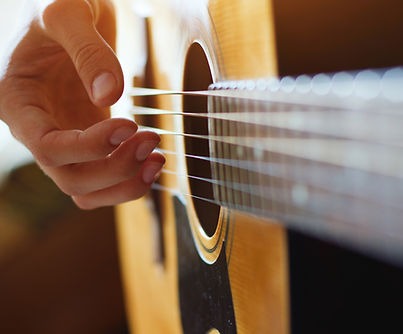
Harp, guitar and ukulele
These instruments require holding arms high o in awkward positions for a long time. Having proper hand mobility and position can be key to playing without pain!
Common complaints: lower back, neck and shoulders, arms and hands, epicondylitis, chest pain, tension headaches.
Osteopathy can help reduce the pain, allow more freedom of movement while playing as well as more accurate movements and dexterity.